Orcadian Terminates UK Offshore Data Center Development Deal
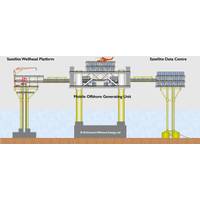
the agreement because the development scope and timeline for Earlham did not align with the U.S. developer's near-term deployment priorities, Orcadian said.The Earlham Gigagrid concept envisages using gas resources within Orcadian's P2680 license to provide power and infrastructure for offshore computing capacity, disconnected from the UK electricity grid and designed to minimize Scope 3 emissions.Orcadian previously said the proposed scheme was intended to enable development of an offshore data center ‘of real scale in UK waters’, with the potential partner acting as the offshore compute
Eco Wave Power to Advance Digital Twin Platform
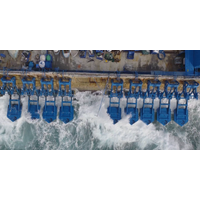
electricity requirements associated with artificial intelligence, data centers and digital infrastructure.Both Eco Wave Power U.S. and AI engineering are members of the NVIDIA Inception program.AI engineering GmbH specializes in applied fluid mechanics, numerical flow simulation and high-performance computing. Its PAMICS technology is a particle-based multi-physics simulation framework designed for complex fluid-dynamics and fluid-structure interaction applications.“Wave energy is a particularly challenging engineering problem because it combines complex free-surface fluid dynamics, structural
Bureau Veritas Gives Blessing to Seatrium’s 30MW Floating Data Center
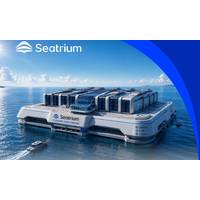
Seatrium has received Approval in Principle (AiP) from Bureau Veritas Marine & Offshore for its 30 MW Floating Data Centre (FDC) concept, marking a milestone in the development of offshore digital infrastructure designed to support growing demand for artificial intelligence and cloud computing.The concept features a jetty-moored, non-propelled barge incorporating six independent 5 MW Data-In-A-Box modules, each integrating IT equipment, cooling systems, power distribution and supporting infrastructure in a modular design.The company said the concept combines modular construction, natural seawater
New Google Transatlantic Cable Connects Portugal with the US
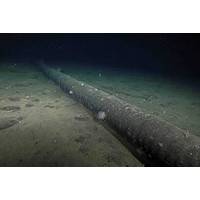
Alphabet's Google has successfully connected a new transatlantic subsea cable to Sines in Portugal, it said on Tuesday, adding another U.S.-Europe data route as demand for cloud computing and artificial intelligence services surges.Google's Nuvem, named after the Portuguese word for "cloud", links Myrtle Beach, South Carolina, with Sines, south of Lisbon, via Bermuda and the Azores.The Nuvem cable system, which spans about 7,000 km (4,350 miles), comprises 16 fibre pairs with a total design capacity of around 384 terabits per second.Giorgia Abeltino, head of government
AUKUS to Develop UUVs, Delivery Set for 2027
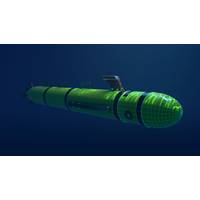
, "and bolster superiority in anti-submarine and anti-surface warfare, mine countermeasures, electronic warfare, and contested littoral manoeuvre," the statement added. The program comes under AUKUS's so-called "Pillar Two" to develop advanced defence technology including quantum computing, undersea, hypersonic, artificial intelligence and cyber technology."The signature project will deliver a suite of highly adaptable multi-mission UUV payloads designed to support undersea operations and maintain our collective advantage in the maritime domain," Hegseth said.Formed by
ABS Publishes New Technical Standard for Subsea Power Cables
Responding to the surge in global subsea cable investment driven by cloud computing and artificial intelligence, ABS has published its Technical Standard for Subsea Power Cables.Subsea power cable design, installation and operation pose unique challenges due to harsh marine environments, significant water depths and extended cable lengths. The new ABS standard provides a comprehensive set of requirements and specifications to help the offshore industry mitigate risk, maintain system integrity and enhance the resilience of subsea power transmission systems.“As subsea power cables become more

Taking Quantum Logic to the Edge
Jason Turner, Chairman and CEO of Entanglement, started the AI quantum computing company in 2017. He quickly realized it was too early. Rather than focus on quantum computing hardware, which is still on the journey to maturity, he chose to focus on quantum logic, and quantum inspired algorithms applicable to existing compute technologies.He and his team therefore turned their attention to using quantum logic. “We reframed the math into our own solvers that can solve massive problems on non-classical computer technology. We are now applying that to different applications, including oceanography
Viridien Teams Up with NVIDIA to Accelerate Seismic Imaging Workflows
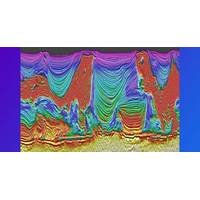
Viridien has entered into a collaboration with NVIDIA to advance high-performance computing (HPC) capabilities for seismic imaging workflows, focusing on optimizing subsurface imaging technologies on NVIDIA accelerated computing platforms.The initiative will center on enhancing Viridien’s seismic imaging algorithms using NVIDIA HPC platforms, incorporating advanced features such as tensor cores and mixed-precision computing. The companies aim to improve system performance, imaging accuracy and operational efficiency for energy and geoscience clients worldwide.The collaboration combines Viridien&rs
URI Computer Simulations Show How Strong Ocean Currents Reduce Size of Surface Waves
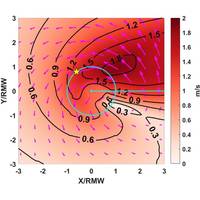
;the average height of the highest one-third of waves—can be reduced by 0.4-2.2 meters, or roughly 1-7 feet, and the dominant wave period can be shortened by about 0.3-1.5 seconds.The simulations required a powerful computer, so the researchers remotely accessed URI’s high-performance computing nodes installed at the Massachusetts Green High Performance Computing Center in Holyoke, Massachusetts. URI formed a partnership with the computing center in 2021.Ginis is hopeful that the team’s research, which was funded by the National Oceanographic Partnership Program/Office of Naval
 August 2026